Skip to product information
1 of 1
Regular price £6.98
Regular price Sale price £6.98
Sale Sold out
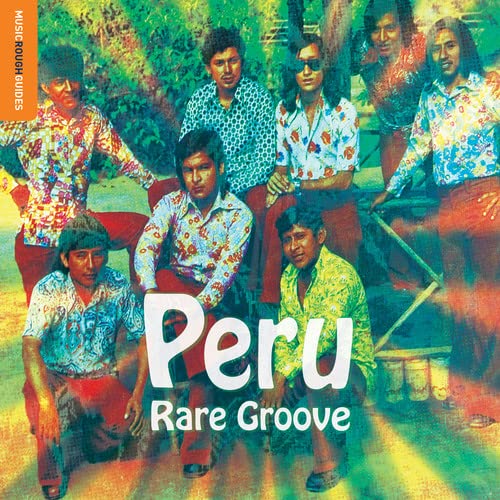
This crate digging Rough Guide brings to light forgotten gems and golden grooves of tropical Peru. Peru is as varied and diverse in its regions, climates, and natural flora and fauna as it is in its people, history and culture. In terms of national popular dance music since the 1950s this compelling variety is equally evident. Several imported and subsequently customised strains of popular music tended to dominate the public's taste. Genres with Caribbean origins from Cuba and Puerto Rico such as mambo, son, bolero, merengue, salsa, descarga, and boogaloo, plus the equally influential cumbia, porro, pompo, and paseo from Colombia were widely significant, as were North American and European styles such as rock, soul, and to a lesser extent jazz ¬– as well as later developments like funk and disco. Though a lot of press has been given in recent years to chicha and other domestic forms of cumbia in Peru, featuring certain popular groups over and over, there has not been as much of a buzz on the country's 'other' tropical music, the above-mentioned mostly Cuban-derived forms, or the rarer, more obscure tracks yet to be touted, and this collection aims to change this imbalance by featuring more of the former and digging deeper into the latter. In the golden era of Peru's record and radio industry, musicians, composers and producers created their own variants of these foreign-born genres, most frequently to satisfy and attract their dancing public (often defined by race/class divisions) with something they could recognize and call their own. Using these imported styles as building blocks they put their personal spin on what was generally termed (in the case of Latin dance music) música tropical bailable. Home-grown ingredients in the form of dances, melodies, and instrumentation from the array of Peru's indigenous peoples (such as the huayno) as well as African and Spanish-influenced música criolla, Spanish flamenco and Brazilian carimbó, samba and baião all swirled together in the melting pot with imported tropical Afro-Caribbean or North American/European pop sounds to create an ambiance as competitive, creative, sophisticated and diverse as anywhere else at the time. As far as tropical music in Peru, visiting artists from Cuba, Colombia, Puerto Rico, New York, Venezuela, Brazil and Mexico were extremely popular as were their recordings. Everyone from Celia Cruz to Carlos Santana had their moment in Lima and elsewhere, oftentimes touching a cultural nerve that ran deep, sharing music that many peruanos felt a kinship with due to a similar colonial past and racial makeup. Interestingly, unlike the music of Cuba, Mexico or Colombia, it is not until recently that Peru's rich tropical golden grooves have been mined properly for wider global audiences to enjoy. The amazing thing is this historical treasure trove seems to be a nearly inexhaustible resource, as this collection showcases a lot of music not on other recent samplers. Though Peruvian musicians have made almost exact copies of popular foreign tunes, several 'standards' of tropical music originally come from Peruvian authors and performers, though a foreign cover version may be the most well known. From 'Todos Vuelven' and 'Toro Mata' (made famous by Rubén Blades and Celia Cruz respectively) to 'Macondo' (inspired by García Márquez's 100 Years of Solitude and covered countless times internationally) and 'Colegiala' (a mega-smash for Colombia's Rodolfo y su Típica but originally by Walter León's Los Ilusionistas), Peru has supplied hits for the world of salsa and cumbia time and time again. Several recent collections have featured the originals, and here for example we present the song that launched a hundred iterations, Johnny Arce's 'Macondo'.
View full details
Description
This crate digging Rough Guide brings to light forgotten gems and golden grooves of tropical Peru. Peru is as varied and diverse in its regions, climates, and natural flora and fauna as it is in its people, history and culture. In terms of national popular dance music since the 1950s this compelling variety is equally evident. Several imported and subsequently customised strains of popular music tended to dominate the public's taste. Genres with Caribbean origins from Cuba and Puerto Rico such as mambo, son, bolero, merengue, salsa, descarga, and boogaloo, plus the equally influential cumbia, porro, pompo, and paseo from Colombia were widely significant, as were North American and European styles such as rock, soul, and to a lesser extent jazz ¬– as well as later developments like funk and disco. Though a lot of press has been given in recent years to chicha and other domestic forms of cumbia in Peru, featuring certain popular groups over and over, there has not been as much of a buzz on the country's 'other' tropical music, the above-mentioned mostly Cuban-derived forms, or the rarer, more obscure tracks yet to be touted, and this collection aims to change this imbalance by featuring more of the former and digging deeper into the latter. In the golden era of Peru's record and radio industry, musicians, composers and producers created their own variants of these foreign-born genres, most frequently to satisfy and attract their dancing public (often defined by race/class divisions) with something they could recognize and call their own. Using these imported styles as building blocks they put their personal spin on what was generally termed (in the case of Latin dance music) música tropical bailable. Home-grown ingredients in the form of dances, melodies, and instrumentation from the array of Peru's indigenous peoples (such as the huayno) as well as African and Spanish-influenced música criolla, Spanish flamenco and Brazilian carimbó, samba and baião all swirled together in the melting pot with imported tropical Afro-Caribbean or North American/European pop sounds to create an ambiance as competitive, creative, sophisticated and diverse as anywhere else at the time. As far as tropical music in Peru, visiting artists from Cuba, Colombia, Puerto Rico, New York, Venezuela, Brazil and Mexico were extremely popular as were their recordings. Everyone from Celia Cruz to Carlos Santana had their moment in Lima and elsewhere, oftentimes touching a cultural nerve that ran deep, sharing music that many peruanos felt a kinship with due to a similar colonial past and racial makeup. Interestingly, unlike the music of Cuba, Mexico or Colombia, it is not until recently that Peru's rich tropical golden grooves have been mined properly for wider global audiences to enjoy. The amazing thing is this historical treasure trove seems to be a nearly inexhaustible resource, as this collection showcases a lot of music not on other recent samplers. Though Peruvian musicians have made almost exact copies of popular foreign tunes, several 'standards' of tropical music originally come from Peruvian authors and performers, though a foreign cover version may be the most well known. From 'Todos Vuelven' and 'Toro Mata' (made famous by Rubén Blades and Celia Cruz respectively) to 'Macondo' (inspired by García Márquez's 100 Years of Solitude and covered countless times internationally) and 'Colegiala' (a mega-smash for Colombia's Rodolfo y su Típica but originally by Walter León's Los Ilusionistas), Peru has supplied hits for the world of salsa and cumbia time and time again. Several recent collections have featured the originals, and here for example we present the song that launched a hundred iterations, Johnny Arce's 'Macondo'.
Track Listing

La Sonora De Lucho Macedo - Quiero Bailar Contigo

Los Compadres Del Ande - Lamparita

Nilo Espinosa Y Orquesta - En El Vacilón

Carlos Pickling Y Su Organo Espacial - Lluvia Con Nieve/El Molestoso

Johnny Arce Y Su Orquesta - Macondo

Coco Lagos Y Sus Orates - La Rumba Empezó

Melcochita Y Karamanduka - Descarga Macchu Picchu

Andres De Colbert Y Su Orquesta - Lobos Al Escape

Los Rumbaney - Serrano

Los Mirlos - El Poder Verde

Juaneco Y Su Combo - Tambores De La Selva

Los Wemblers - Baión De La Selva

Pedro Miguel y sus Maracaibos - Son Con Boogaloo

Alfredito Linares - Macchu Picchu

Popi Y Sus Pirañas - El Negro Coco

Aniceto Y Sus Fabulosos - Guajira Enamorada

Los Blacanguay - La Palmadita

Chacal Y Sus Estrellas - Nuestra Pobreza

Félix Martinez - Me Voy Llorando

Otto de Rojas - Ha Muerto Un Rumbero

Details
  • Genre: Folk & Country
  • Product Type: AUDIO CD
  • Barcode: 605633134728
  • Release Date: July 28, 2026
Delivery and Returns
Dispatch Information: Dispatch times vary by item and items are only dispatched on UK working days – not weekends or UK Bank Holidays. Items marked "Dispatched Same Day" will be dispatched on the day of purchase if bought before 2pm GMT. "Dispatched Same Day" items bought after 2pm GMT or on a non-working day will be dispatched on the next working day. For all other items the dispatch timeframe is clearly labelled on the product page.

Delivery Information: We aim to deliver your order as quickly and efficiently as possible. All UK orders are dispatched using Royal Mail 48 Tracked service and the standard delivery times are 2-3 business days. Please note that delivery times for overseas orders will vary depending on your location and the shipping option you choose during checkout.

Shipping Costs: We offer free delivery on all UK orders and free worldwide delivery on orders over £15.

Tracking Your Order: All UK orders are tracked. Once your order is dispatched, you will receive a tracking number via email. You can use this tracking number to monitor the progress of your delivery on the Royal Mail Track and Trace website.

Returns and Exchanges: We want you to be completely satisfied with your purchase. If for any reason you are not happy with your order, you may return it within 28 days of the item being dispatched for a refund or exchange. Please note the following guidelines:
- Items must be returned in their original condition and packaging – items that have been opened or had shrink wrap removed are not eligible for return or refund.
- Make sure to include your order number in the returned package.

How to Initiate a Return: To initiate a return or exchange, please contact our customer service team. The team is available to assist you with any questions or concerns you may have about the process.

Refund Processing: Refunds will be processed as soon as we receive your item back into our warehouse. Replacements are subject to availability and if a replacement is not available, a refund will be issued.

If you have any further questions or need assistance, please don't hesitate to contact our customer service team or check out our FAQ’s. We're here to help ensure your shopping experience is enjoyable and hassle-free. Thank you for choosing Chalkys!