Skip to product information
1 of 1
Regular price £14.98
Regular price Sale price £14.98
Sale Sold out
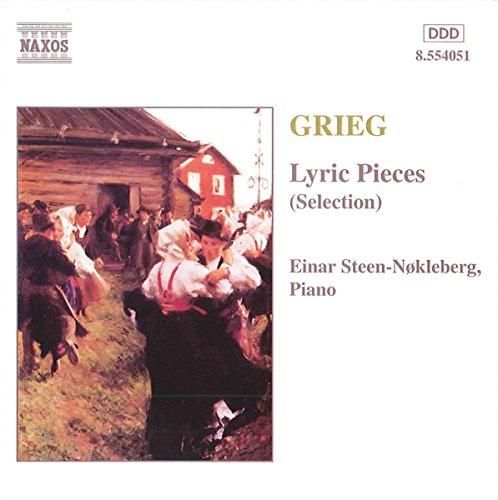
Edvard Grieg (1843 -1907) Lyric Pieces (selections) Among Grieg's works, the Lyric Pieces seem to have a specialplace with a special significance in their order. That he apparently viewedthem in the same way is clear from the fact that his last lyrical piece, 'Remembrances',Op. 71, No. 7, in 1901, quotes his first piece, 'Arietta', Op. 12, No. 1, of 1867. Thus the circleis completed, marking the end of the period in which he was concerned with thistype of piano piece, a type that the whole world loved, admired, and above all,played. Even though he revealed his deepest, most intimate feelings in many ofthe lyrical pieces, the music remains approachable and is often played. Itwould probably be hard to find the piano student who has not learned tolove these lyrical pieces, in spite of their occasional difficulty, and doesnot feel that the struggle has been worth while, if the results are good. Oneshould ignore the fact that they have at times been looked upon with disdain asinferior. In fact they have survived as music that is both living and vital,because they are so strongly rooted in the consciousness of the people. The expression Lyric Pieces is actually Grieg's owninvention, but does not describe a genre. Character-pieces for the piano, withor without descriptive titles, have a long tradition and Grieg is only one tocontribute to this, although his contribution is a very important one. Each ofhis lyric pieces, like Mendelssohn's Lieder ohne Worte, expresses onlyone mood, one feeling. From the publication of the second book, in 1883, (thefirst one came out in 1867), Grieg went on to publish collections of Lyric Piecesat regular intervals until 1901. They cover the greater part of Grieg's lifeas an established composer, and represent more or less every single facet ofhis personal style. No attempt has been made to hide the fact that the lyric piecesgradually became good business, both for Grieg himself, as well as for thepublishers. In a letter to Peters, Grieg called them Semmeln - fragrant,fresh-baked, bread - and the fact of the matter is that they were indeed soldlike "hot cakes". No wonder the publisher Peters, in London and Frankfurt, was delighted every time Grieg delivered a manuscript for a new album of pianopieces. He was strongly attached to many of these pieces and enjoyed playingthem, while there were others that he was not pleased with at all. In a letterto his friend, Emil Horneman, he writes: My Silence is unforgivable, because I honestIy haven't doneanything, other than the so-called, "Lyric Pieces", which aresurrounding me like lice and fleas in the country. (Letter to EmilHorneman, 15 September 1898)Other people also made snide remarks about them, such as Debussy'scomment that the lyric pieces were like "pink candies filled with snow,"probably alluding to the pink covers on the editions of the albums from Peters.Grieg's Lyric Pieces contain 66 compositions, published inten albums, during the years from 1867 to 1901. Most o
View full details
Description
Edvard Grieg (1843 -1907) Lyric Pieces (selections) Among Grieg's works, the Lyric Pieces seem to have a specialplace with a special significance in their order. That he apparently viewedthem in the same way is clear from the fact that his last lyrical piece, 'Remembrances',Op. 71, No. 7, in 1901, quotes his first piece, 'Arietta', Op. 12, No. 1, of 1867. Thus the circleis completed, marking the end of the period in which he was concerned with thistype of piano piece, a type that the whole world loved, admired, and above all,played. Even though he revealed his deepest, most intimate feelings in many ofthe lyrical pieces, the music remains approachable and is often played. Itwould probably be hard to find the piano student who has not learned tolove these lyrical pieces, in spite of their occasional difficulty, and doesnot feel that the struggle has been worth while, if the results are good. Oneshould ignore the fact that they have at times been looked upon with disdain asinferior. In fact they have survived as music that is both living and vital,because they are so strongly rooted in the consciousness of the people. The expression Lyric Pieces is actually Grieg's owninvention, but does not describe a genre. Character-pieces for the piano, withor without descriptive titles, have a long tradition and Grieg is only one tocontribute to this, although his contribution is a very important one. Each ofhis lyric pieces, like Mendelssohn's Lieder ohne Worte, expresses onlyone mood, one feeling. From the publication of the second book, in 1883, (thefirst one came out in 1867), Grieg went on to publish collections of Lyric Piecesat regular intervals until 1901. They cover the greater part of Grieg's lifeas an established composer, and represent more or less every single facet ofhis personal style. No attempt has been made to hide the fact that the lyric piecesgradually became good business, both for Grieg himself, as well as for thepublishers. In a letter to Peters, Grieg called them Semmeln - fragrant,fresh-baked, bread - and the fact of the matter is that they were indeed soldlike "hot cakes". No wonder the publisher Peters, in London and Frankfurt, was delighted every time Grieg delivered a manuscript for a new album of pianopieces. He was strongly attached to many of these pieces and enjoyed playingthem, while there were others that he was not pleased with at all. In a letterto his friend, Emil Horneman, he writes: My Silence is unforgivable, because I honestIy haven't doneanything, other than the so-called, "Lyric Pieces", which aresurrounding me like lice and fleas in the country. (Letter to EmilHorneman, 15 September 1898)Other people also made snide remarks about them, such as Debussy'scomment that the lyric pieces were like "pink candies filled with snow,"probably alluding to the pink covers on the editions of the albums from Peters.Grieg's Lyric Pieces contain 66 compositions, published inten albums, during the years from 1867 to 1901. Most o
Track Listing

Book 1, Op.12: No.1, Arietta

Book 1, Op.12: No.4, Elves' Dance

Book 1, Op.12: No.5, Folk Song

Book 2, Op.38: No.1, Cradle Song

Book 2, Op.38: No.2, Folk Song

Book 2, Op.38: No.5, Folk Dance

Book 2, Op.38: No.7, Waltz

Book 3, Op.43: No.1, Butterfly

Book 3, Op.43: No.4, Little Bird

Book 3, Op.43: No.6, To The Spring

Book 4, Op.47: No.1, Valse Impromptu

Book 4, Op.47: No.2, Album Leaf

Book 4, Op.47: No.3, Melody

Book 4, Op.47: No.4, Norwegian Dance

Book 5, Op.54: No.1, Herd Boy

Book 5, Op.54: No.2, Norwegian March

Book 5, Op.54: No.3, March of the Trolls

Book 5, Op.54: No.4, Nocturne

Book 6, Op.57: No.5, Nostalgia

Book 7, Op.62: No.3, French Serenade

Book 7, Op.62: No.4, Brooklet

Book 7, Op.62: No.6, Homeward

Book 8, Op.65: No.5, In Ballad Style

Book 8, Op.65: No.6, Wedding Day at Troldhaugen

Book 9, Op.68: No.5, Cradle Song

Book 10, Op.71: No.3, Puck

Book 10, Op.71: No.7, Remembrances

Details
  • Genre: Classical
  • Product Type: Audio CD
  • Barcode: 636943405123
  • Release Date: January 12, 1999
Delivery and Returns
Dispatch Information: Dispatch times vary by item and items are only dispatched on UK working days – not weekends or UK Bank Holidays. Items marked "Dispatched Same Day" will be dispatched on the day of purchase if bought before 2pm GMT. "Dispatched Same Day" items bought after 2pm GMT or on a non-working day will be dispatched on the next working day. We aim to dispatch all other items within 3-5 working days.

Delivery Information: We aim to deliver your order as quickly and efficiently as possible. All UK orders are dispatched using Royal Mail 48 Tracked service and the standard delivery times are 2-3 business days. Please note that delivery times for overseas orders will vary depending on your location and the shipping option you choose during checkout.

Shipping Costs: We offer free delivery on all UK orders and free worldwide delivery on orders over £15.

Tracking Your Order: All UK orders are tracked. Once your order is dispatched, you will receive a tracking number via email. You can use this tracking number to monitor the progress of your delivery on the Royal Mail Track and Trace website.

Returns and Exchanges: We want you to be completely satisfied with your purchase. If for any reason you are not happy with your order, you may return it within 28 days of the item being dispatched for a refund or exchange. Please note the following guidelines:
- Items must be returned in their original condition and packaging – items that have been opened or had shrink wrap removed are not eligible for return or refund.
- Make sure to include your order number in the returned package.

How to Initiate a Return: To initiate a return or exchange, please contact our customer service team. The team is available to assist you with any questions or concerns you may have about the process.

Refund Processing: Refunds will be processed as soon as we receive your item back into our warehouse. Replacements are subject to availability and if a replacement is not available, a refund will be issued.

If you have any further questions or need assistance, please don't hesitate to contact our customer service team or check out our FAQ’s. We're here to help ensure your shopping experience is enjoyable and hassle-free. Thank you for choosing Chalkys!