Skip to product information
1 of 1
Regular price £17.48
Regular price Sale price £17.48
Sale Sold out
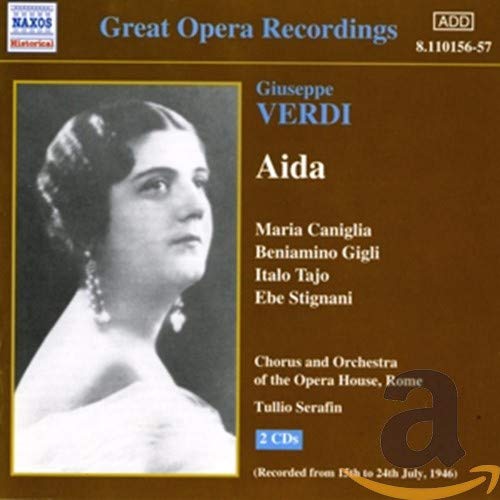
AIDAVerdi wrote his Egyptian opera Aida for performance at the new Cairo Opera House, which had opened in 1870 with a performance of Rigoletto. The story of the new work has some basis in the Hellenistic Aethiopica of Heliodorus, but was claimed as the original work of Auguste Mariette, known as Mariette Bey. It has been suggested that Temistocle Solera was responsible for the scenario, but if this is so, the fact was not known to Verdi, who had quarrelled with Solera in 1846 over the libretto of his opera Attila. The text of Aida was by Antonio Ghislanzoni and the opera was finally staged in Cairo on Christmas Eve 1871, after various delays, during the second season at the new house. It was mounted the following February at La Scala, Milan, in both places to very considerable acclaim.The recording of 1946 was conducted by Tullio Serafin, whose thorough grounding in the traditions of Italian opera and inspired leadership did much to encourage and foster interest in the art, particularly in the years after 1945, when younger singers could profit from his long experience. From 1924 until 1934 he had worked at the Metropolitan Opera in New York, conducting a wide-ranging operatic repertoire, and on his return to Europe was engaged first as artistic director of the Teatro Reale in Rome, which he finally left in 1943. His earlier career had involved him with La Scala, Milan, before and towards the end of the first world war, and he returned there for the first post-war season in 1946.Beniamino Gigli had made his operatic début in 1914 and his début at La Scala four years later in Boito’s Mefistofele, undertaking the rôle of Faust again in that opera for his Metropolitan Opera début in 1920. He continued to appear at the Met for the following twelve years, returning to Italy and pursuing an international career there and elsewhere in the years that followed. It was in 1946 that he was able to re-establish his international reputation once more as the heir to Caruso in a career that only ended in 1956, the year before his death. In the present recording he is partnered by the Italian soprano Maria Caniglia, who had made her début at La Scala in 1930, at the age of 25. She appeared there until the destruction of the theatre in 1943 and returned for three seasons from 1948, after its rebuilding. She died in 1979. The rôle of Amneris is sung by the great Italian mezzo-soprano Ebe Stignani, who had made her operatic début at the San Carlo in Naples in 1925 in the same part. She was engaged for La Scala by Toscanini in 1926 and continued there and in an international career for many years, with a repertoire that embraced the principal Verdi mezzo rôles, including that of the Requiem, which she memorably recorded with Gigli, Caniglia and Ezio Pinza under Serafin in 1939. The dramatic baritone Gino Bechi sang at La Scala from 1939 until 1953, appearing at the post-war re-opening of the house in 1946. He
View full details
Description
AIDAVerdi wrote his Egyptian opera Aida for performance at the new Cairo Opera House, which had opened in 1870 with a performance of Rigoletto. The story of the new work has some basis in the Hellenistic Aethiopica of Heliodorus, but was claimed as the original work of Auguste Mariette, known as Mariette Bey. It has been suggested that Temistocle Solera was responsible for the scenario, but if this is so, the fact was not known to Verdi, who had quarrelled with Solera in 1846 over the libretto of his opera Attila. The text of Aida was by Antonio Ghislanzoni and the opera was finally staged in Cairo on Christmas Eve 1871, after various delays, during the second season at the new house. It was mounted the following February at La Scala, Milan, in both places to very considerable acclaim.The recording of 1946 was conducted by Tullio Serafin, whose thorough grounding in the traditions of Italian opera and inspired leadership did much to encourage and foster interest in the art, particularly in the years after 1945, when younger singers could profit from his long experience. From 1924 until 1934 he had worked at the Metropolitan Opera in New York, conducting a wide-ranging operatic repertoire, and on his return to Europe was engaged first as artistic director of the Teatro Reale in Rome, which he finally left in 1943. His earlier career had involved him with La Scala, Milan, before and towards the end of the first world war, and he returned there for the first post-war season in 1946.Beniamino Gigli had made his operatic début in 1914 and his début at La Scala four years later in Boito’s Mefistofele, undertaking the rôle of Faust again in that opera for his Metropolitan Opera début in 1920. He continued to appear at the Met for the following twelve years, returning to Italy and pursuing an international career there and elsewhere in the years that followed. It was in 1946 that he was able to re-establish his international reputation once more as the heir to Caruso in a career that only ended in 1956, the year before his death. In the present recording he is partnered by the Italian soprano Maria Caniglia, who had made her début at La Scala in 1930, at the age of 25. She appeared there until the destruction of the theatre in 1943 and returned for three seasons from 1948, after its rebuilding. She died in 1979. The rôle of Amneris is sung by the great Italian mezzo-soprano Ebe Stignani, who had made her operatic début at the San Carlo in Naples in 1925 in the same part. She was engaged for La Scala by Toscanini in 1926 and continued there and in an international career for many years, with a repertoire that embraced the principal Verdi mezzo rôles, including that of the Requiem, which she memorably recorded with Gigli, Caniglia and Ezio Pinza under Serafin in 1939. The dramatic baritone Gino Bechi sang at La Scala from 1939 until 1953, appearing at the post-war re-opening of the house in 1946. He
Track Listing

Prld - Orch Of The Opr House, Rome/Tullio Serafin

Act III: O Tu Che Sei D'Osiride - Maria Huder/Tancredi Pasero/Ebe Stignani

Act I, Scene 1: Si: Corre Voce Che L'Etiope Ardisca - Tancredi Pasero/Beniamino Gigli

Act III: Qui Radames Verra...Che Vorra Dirmi? - Maria Caniglia

Act I, Scene 1: Se Quel Guerrir Io Fossi! - Beniamino Gigli

Act III: Ciel! Mio Padre! - Maria Caniglia/Gino Bechi

Act I, Scene 1: Quale Insolita Gioia - Ebe Stignani/Beniamino Gigli/Maria Caniglia

Act III: Pur Ti Riveggo, Mia Dolce Aida... - Beniamino Gigli/Maria Caniglia

Act I, Scene 1: Alta Cagion V'aduna - Italo Tajo/Adelio Zagonero/Beniamino Gigli/Tancredi Pasero

Act III: Fuggiam Gli Ardori Inospiti - Maria Caniglia/Beniamino Gigli/Gino Bechi

Act I, Scene 1: Ritorna Vincitor! - Maria Caniglia

Act III: Tu... Amonasro!...Tu!...Il Re? - Beniamino Gigli/Maria Caniglia/Gino Bechi/Ebe Stignani/Tan

Act I, Scene 2: Possente, Possente Ftha - Maria Huder/Beniamino Gigli

Act IV, Scene 1: L'abborrita Rivale A Me Sfuggia... - Ebe Stignani

Act I, Scene 2: Mortal, Diletto Ai Numi - Tancredi Pasero/Beniamino Gigli/Maria Huder

Act IV, Scene 1: Gia I Sacerdoti Adunansi - Ebe Stignani/Beniamino Gigli

Act II, Scene 1: Chi Mai Fra Gl'inni E I Plausi - Ebe Stignani

Act IV, Scene 1: Ohime!...Morir Mi Sento! Oh! Chi Io Salva? - Ebe Stignani/Tancredi Pasero

Act II, Scene 1: Fu La Sorte Dell'armi A' Tuoi Funesta - Ebe Stignani/Maria Caniglia

Act IV, Scene 1: Radames! Radames! Radames! - Tancredi Pasero/Ebe Stignani

Act II, Scene 1: Su! Del Nilo Al Sacro Lido - Ebe Stignani/Maria Caniglia/Chor Of The Opr House, Rom

Act IV, Scene 2: La Fatal Pietra Sovra Me Si Chiuse - Beniamino Gigli/Maria Caniglia

Act II, Scene 2: Gloria All'Egitto, Ad Iside - Tancredi Pasero

Act IV, Scene 2: Presago Il Core Della Tua Condanna - Maria Caniglia/Beniamino Gigli/Maria Huder

Act II, Scene 2: Marcia - Tancredi Pasero

Act IV, Scene 2: O Terra, Addio; Addio, Valle Di Pianti - Maria Caniglia/Beniamino Gigli/Maria Huder

Act II, Scene 2: Vieni, O Guerriero Vindice - Tancredi Pasero

Act II, Scene 2: Salvator Della Patria, Io Ti Saluto - Italo Tajo/Beniamino Gigli/Tancredi Pasero

Act II, Scene 2: Che Veggo!...Egli?... Mio Padre! - Maria Caniglia/Ebe Stignani/Gino Bechi/Italo Taj

Act II, Scene 2: Quest'assisa Ch'io Vesto Vi Dica - Gino Bechi

Act II, Scene 2: Ma Tu, Re, Tu Signore Possente - Gino Bechi/Maria Caniglia/Tancredi Pasero/Italo Ta

Act II, Scene 2: O Re: Pei Sacri Numi - Beniamino Gigli/Ebe Stignani/Tancredi Pasero/Italo Tajo

Act II, Scene 2: Gloria All'Egitto, Ad Iside - Italo Tajo/Tancredi Pasero/Maria Canigli/Ebe Stignani

Details
  • Genre: Classical
  • Product Type: AUDIO CD
  • Barcode: 636943115626
  • Release Date: March 20, 2025
Delivery and Returns
Dispatch Information: Dispatch times vary by item and items are only dispatched on UK working days – not weekends or UK Bank Holidays. Items marked "Dispatched Same Day" will be dispatched on the day of purchase if bought before 2pm GMT. "Dispatched Same Day" items bought after 2pm GMT or on a non-working day will be dispatched on the next working day. We aim to dispatch all other items within 3-5 working days.

Delivery Information: We aim to deliver your order as quickly and efficiently as possible. All UK orders are dispatched using Royal Mail 48 Tracked service and the standard delivery times are 2-3 business days. Please note that delivery times for overseas orders will vary depending on your location and the shipping option you choose during checkout.

Shipping Costs: We offer free delivery on all UK orders and free worldwide delivery on orders over £15.

Tracking Your Order: All UK orders are tracked. Once your order is dispatched, you will receive a tracking number via email. You can use this tracking number to monitor the progress of your delivery on the Royal Mail Track and Trace website.

Returns and Exchanges: We want you to be completely satisfied with your purchase. If for any reason you are not happy with your order, you may return it within 28 days of the item being dispatched for a refund or exchange. Please note the following guidelines:
- Items must be returned in their original condition and packaging – items that have been opened or had shrink wrap removed are not eligible for return or refund.
- Make sure to include your order number in the returned package.

How to Initiate a Return: To initiate a return or exchange, please contact our customer service team. The team is available to assist you with any questions or concerns you may have about the process.

Refund Processing: Refunds will be processed as soon as we receive your item back into our warehouse. Replacements are subject to availability and if a replacement is not available, a refund will be issued.

If you have any further questions or need assistance, please don't hesitate to contact our customer service team or check out our FAQ’s. We're here to help ensure your shopping experience is enjoyable and hassle-free. Thank you for choosing Chalkys!