Skip to product information
1 of 1

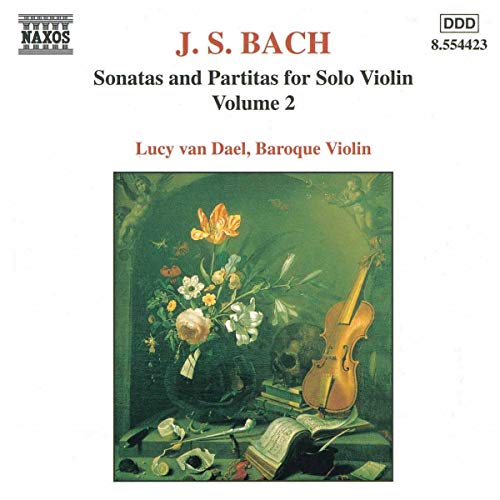
Van Dael - Sonatas and Partitas for Solo Violin, Vol.2 [CD]

Van Dael - Sonatas and Partitas for Solo Violin, Vol.2 [CD]

Regular price £12.48
Regular price Sale price £12.48
Sale Sold out
Brand New From Reputable UK Company With 30 Years Experience In Retail, Please Note Not All Our New Items Are Shrink Wrapped.
All items shipped within 3 working days of payment.
Please note that all our DVDs are Region 2.


Please note that not all audio CDs are shrink-wrapped fom the factory.


Johann Sebastian Bach is now such a revered composer that it is difficult to believe that for 150 years after his death his music had largely fallen into oblivion, and well-meaning champions were orchestrating his organ music just to keep his name alive. He was born in 1685 and was part of a long line of a Bach family that had been kapellmeisters and cantors since the middle of the 16th century. Sadly his parents both died when he was 10, and Johann was brought up and educated in music by relatives. As a teenager he would practice the violin, clavichord and organ all night, and at the age of 20 he walked 50 miles just to hear the great organist, Buxtehude, perform. He was to become a celebrated church organist, holding several major appointments in Arnstadt, Weimar and Mühlhausen over the next twenty years. Throughout the period he was busy composing, but it was after 1723, when he moved to Leipzig to take charge of church music there, that the deluge of compositions emerged. He was to remain in Leipzig for 27 years. In 1749 he underwent two operations to restore his failing sight, but it only made him blind. Miraculously his sight was restored the following year, but ten days later he died aged 65.  He left an enormous catalogue of works, much of it linked with the church. Yet at the time he was only known as a composer in his own locality, few of his works having been published. As much of it was written against the deadlines of specific events in the church calendar, his output was uneven, but his major oratorios were landmark events, and his organ music became the basis of the organ repertoire. In particular he took the art of the fugue to a state of perfection. He was, however, active outside of the church and wrote a large number of concertos, orchestral works, and solo scores for clavichord, violin and cello.He was also a distinguished teacher, and a number of his works were obviously intended for teaching advanced students.Though Bach's Sonatas and Partitas stand at the very pinnacle of the violin repertoire, little is known of their origin. He seems to have composed them with no one in mind, though he had come into contact with an outstanding violinist, J.P. von Westhoff who may have provided the stimulus. The present group of six works probably date from around 1720, and they are now performed alternately - sonata, partita, sonata - in the usual Bach format. In form the sonatas are not German, but of Italian influence, using the Italian church sonata form. The partita form, on the other hand was developed from the suite format. They are works that place considerable demands on the soloist, made even more demanding by the changes that have taken place in the violin since the works were created.Lucy van Dael studied at the Royal Conservatory in The Hague, and subsequently joined the Netherlands Chamber Orchestra. It was at this time that she became interested in the baroque violin, and became one of the leading advocates of peri

Partita No.2 in d, BWV1004: Allemanda

Partita No.2 in d, BWV1004: Corrente

Partita No.2 in d, BWV1004: Sarabanda

Partita No.2 in d, BWV1004: Giga

Partita No.2 in d, BWV1004: Ciaconna

Son No.3 in C, BWV1005: Adagio

Son No.3 in C, BWV1005: Fuga

Son No.3 in C, BWV1005: Largo

Son No.3 in C, BWV1005: Allegro Assai

Partita No.3 in E, BWV1006: Prld

Partita No.3 in E, BWV1006: Loure

Partita No.3 in E, BWV1006: Gavotte En Rondeau

Partita No.3 in E, BWV1006: Menuett I

Partita No.3 in E, BWV1006: Menuett II

Partita No.3 in E, BWV1006: Bouree

Partita No.3 in E, BWV1006: Gigue

View full details
Description
Please Note Not All Our New Items Are Shrink Wrapped.All items shipped within 3 working days of payment.Johann Sebastian Bach is now such a revered composer that it is difficult to believe that for 150 years after his death his music had largely fallen into oblivion, and well-meaning champions were orchestrating his organ music just to keep his name alive. He was born in 1685 and was part of a long line of a Bach family that had been kapellmeisters and cantors since the middle of the 16th century. Sadly his parents both died when he was 10, and Johann was brought up and educated in music by relatives. As a teenager he would practice the violin, clavichord and organ all night, and at the age of 20 he walked 50 miles just to hear the great organist, Buxtehude, perform. He was to become a celebrated church organist, holding several major appointments in Arnstadt, Weimar and Mühlhausen over the next twenty years. Throughout the period he was busy composing, but it was after 1723, when he moved to Leipzig to take charge of church music there, that the deluge of compositions emerged. He was to remain in Leipzig for 27 years. In 1749 he underwent two operations to restore his failing sight, but it only made him blind. Miraculously his sight was restored the following year, but ten days later he died aged 65.  He left an enormous catalogue of works, much of it linked with the church. Yet at the time he was only known as a composer in his own locality, few of his works having been published. As much of it was written against the deadlines of specific events in the church calendar, his output was uneven, but his major oratorios were landmark events, and his organ music became the basis of the organ repertoire. In particular he took the art of the fugue to a state of perfection. He was, however, active outside of the church and wrote a large number of concertos, orchestral works, and solo scores for clavichord, violin and cello.He was also a distinguished teacher, and a number of his works were obviously intended for teaching advanced students.Though Bach's Sonatas and Partitas stand at the very pinnacle of the violin repertoire, little is known of their origin. He seems to have composed them with no one in mind, though he had come into contact with an outstanding violinist, J.P. von Westhoff who may have provided the stimulus. The present group of six works probably date from around 1720, and they are now performed alternately - sonata, partita, sonata - in the usual Bach format. In form the sonatas are not German, but of Italian influence, using the Italian church sonata form. The partita form, on the other hand was developed from the suite format. They are works that place considerable demands on the soloist, made even more demanding by the changes that have taken place in the violin since the works were created.Lucy van Dael studied at the Royal Conservatory in The Hague, and subsequently joined the Netherlands Chamber Orchestra. It was at this time that she became interested in the baroque violin, and became one of the leading advocates of peri

Partita No.2 in d, BWV1004: Allemanda

Partita No.2 in d, BWV1004: Corrente

Partita No.2 in d, BWV1004: Sarabanda

Partita No.2 in d, BWV1004: Giga

Partita No.2 in d, BWV1004: Ciaconna

Son No.3 in C, BWV1005: Adagio

Son No.3 in C, BWV1005: Fuga

Son No.3 in C, BWV1005: Largo

Son No.3 in C, BWV1005: Allegro Assai

Partita No.3 in E, BWV1006: Prld

Partita No.3 in E, BWV1006: Loure

Partita No.3 in E, BWV1006: Gavotte En Rondeau

Partita No.3 in E, BWV1006: Menuett I

Partita No.3 in E, BWV1006: Menuett II

Partita No.3 in E, BWV1006: Bouree

Partita No.3 in E, BWV1006: Gigue

Track Listing

Partita No.2 in d, BWV1004: Allemanda

Partita No.2 in d, BWV1004: Corrente

Partita No.2 in d, BWV1004: Sarabanda

Partita No.2 in d, BWV1004: Giga

Partita No.2 in d, BWV1004: Ciaconna

Son No.3 in C, BWV1005: Adagio

Son No.3 in C, BWV1005: Fuga

Son No.3 in C, BWV1005: Largo

Son No.3 in C, BWV1005: Allegro Assai

Partita No.3 in E, BWV1006: Prld

Partita No.3 in E, BWV1006: Loure

Partita No.3 in E, BWV1006: Gavotte En Rondeau

Partita No.3 in E, BWV1006: Menuett I

Partita No.3 in E, BWV1006: Menuett II

Partita No.3 in E, BWV1006: Bouree

Partita No.3 in E, BWV1006: Gigue

Details
  • Product Type: AUDIO CD
  • Barcode: 636943442326
Delivery and Returns
Dispatch Information: Dispatch times vary by item and items are only dispatched on UK working days – not weekends or UK Bank Holidays. Items marked "Dispatched Same Day" will be dispatched on the day of purchase if bought before 2pm GMT. "Dispatched Same Day" items bought after 2pm GMT or on a non-working day will be dispatched on the next working day. We aim to dispatch all other items within 3-5 working days.

Delivery Information: We aim to deliver your order as quickly and efficiently as possible. All UK orders are dispatched using Royal Mail 48 Tracked service and the standard delivery times are 2-3 business days. Please note that delivery times for overseas orders will vary depending on your location and the shipping option you choose during checkout.

Shipping Costs: We offer free delivery on all UK orders and free worldwide delivery on orders over £15.

Tracking Your Order: All UK orders are tracked. Once your order is dispatched, you will receive a tracking number via email. You can use this tracking number to monitor the progress of your delivery on the Royal Mail Track and Trace website.

Returns and Exchanges: We want you to be completely satisfied with your purchase. If for any reason you are not happy with your order, you may return it within 28 days of the item being dispatched for a refund or exchange. Please note the following guidelines:
- Items must be returned in their original condition and packaging – items that have been opened or had shrink wrap removed are not eligible for return or refund.
- Make sure to include your order number in the returned package.

How to Initiate a Return: To initiate a return or exchange, please contact our customer service team. The team is available to assist you with any questions or concerns you may have about the process.

Refund Processing: Refunds will be processed as soon as we receive your item back into our warehouse. Replacements are subject to availability and if a replacement is not available, a refund will be issued.

If you have any further questions or need assistance, please don't hesitate to contact our customer service team or check out our FAQ’s. We're here to help ensure your shopping experience is enjoyable and hassle-free. Thank you for choosing Chalkys!