

Description
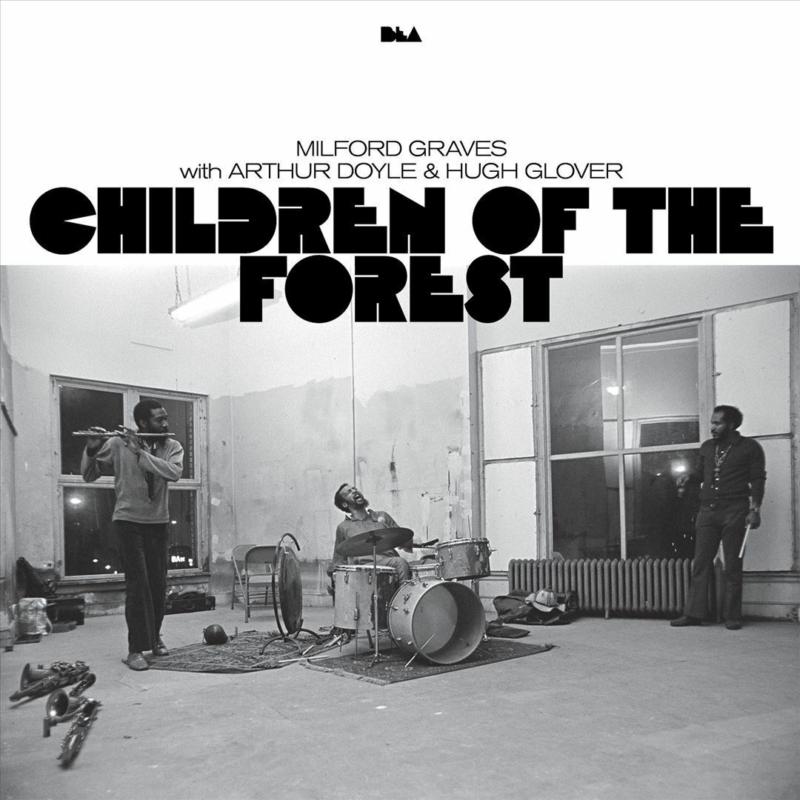
Please Note Not All Our New Items Are Shrink Wrapped.All items shipped within 3 working days of payment.We take every step to ensure your vinyl purchase is delivered to you in the same pristine condition as when it leaves our packing area. We have selected very robust 12 inch mailers in order to protect your valuable vinyl throughout its journey to your doorstep. Even when handled incorrectly, your item should still arrive in tip-top condition.Black Editions Archive is ecstatic to announce the newest release in the Milford Graves Archival series, the double LP, Children of the Forest, featuring previously unreleased 1976 sessions with Hugh Glover and Arthur Doyle that re-write the book on Milford Graves' ensemble music of the 1970s. Graves recorded these sessions himself in his legendary Queens basement laboratory and workshop in the weeks immediately leading up to the March 1976 session that, with the same unit, produced what many consider his most iconic album, Babi, recorded at WBAI-FM Free Music Store. Following the death of Albert Ayler in 1970 and up until his storied trip to FESTAC 1977 in Lagos, Nigeria, Graves gigged fairly often as a band leader in the New York Loft scene and traveled twice to Europe (1973, 1974) with duos, trios and quartets comprised of fellow New York City based musicians -almost always with Hugh Glover, and variously including Arthur Williams, Joe Rigby, Frank Lowe, and Arthur Doyle. The three sessions that comprise Children of the Forest date from near the end of this intensive period of grassroots activity by Graves during a peak era of musical & cultural ferment in jazz & Black American Music. The earliest recordings feature the duo of Graves (drums & percussion) and Glover (tenor saxophone) from January 24th, and Graves solo (drums & percussion) from February 2. In an interview commissioned for this release and conducted by Jake Meginsky, Glover discusses the mastery of form and execution in Graves's playing and approach: 'It has always been a mystery to me how Cuban drummers in Bata were able to modulate the rhythm and the meter. Well, it takes more than one player to do it Cuban style. Prof (Graves) shows you can do it as one player. The reason he's able to do it is because he has an encyclopedic knowledge of the rhythms of the Caribbean, rhythms of Africa, plus rhythms of jazz. He can move around without losing the feel.' The centerpiece of this set is the March 11 session featuring Graves, Doyle on tenor saxophone and fife, and Glover on a rather unusual pair of instruments that would not appear on the Babi recording just one week later -klaxon and the vaccine, a Haitian one-note trumpet. Glover: 'The klaxon - it's important to keep that tribal possession-state feel... because it's not a Hollywood gallop. It's very much about the energy, this gallop. Prof (Graves) talks about that, talking about the low, the galloping as in the Divine Horsemen of Haiti.' Doyle's visceral and unrestrained tenor playing on the March 11 session is further evidence as to why his work, especially during this period, has attained mythic status among aficionados of free jazz and even noise music. Graves would later discuss Doyle in Conversations (William Parker, 2011 Rogue Art Books): 'There was another horn player I know that really got into it from the gut and he had a certain kind of intellectualism when we performed - that was Arthur Doyle. (laughs) Arthur Doyle would just go into it. I mean really just go into it - something happened there that was beyond the immediate intellectual control of the people who was doing it. It was about just doing it and don't worry about all these people putting you down. The most important thing was what was coming out of your instrument and how it was effecting people.' Listening to these recordings, that spirit is unmistakable. The original 1/4 inch reel, labeled 'Pygmy' by Graves, including 15 minutes of audio from an unknown documentary on the Mbuti People of the Congo Basin, are among the few tapes we've so far encountered from Graves' private archive that seem clearly intended in his conception & sequencing to be an album. For this reason, these recordings are now presented exactly as assembled by Graves, for soonest possible release.
Details
- Genre: Jazz
- Product Type: Vinyl
- Barcode: 881626002964
Delivery and Returns
Dispatch Information: Dispatch times vary by item and items are only dispatched on UK working days – not weekends or UK Bank Holidays. Items marked "Dispatched Same Day" will be dispatched on the day of purchase if bought before 2pm GMT. "Dispatched Same Day" items bought after 2pm GMT or on a non-working day will be dispatched on the next working day. For all other items the dispatch timeframe is clearly labelled on the product page.
Delivery Information: We aim to deliver your order as quickly and efficiently as possible. All UK orders are dispatched using Royal Mail 48 Tracked service and the standard delivery times are 2-3 business days. Please note that delivery times for overseas orders will vary depending on your location and the shipping option you choose during checkout.
Shipping Costs: We offer free delivery on all UK orders and free worldwide delivery on orders over £15.
Tracking Your Order: All UK orders are tracked. Once your order is dispatched, you will receive a tracking number via email. You can use this tracking number to monitor the progress of your delivery on the Royal Mail Track and Trace website.
Returns and Exchanges: We want you to be completely satisfied with your purchase. If for any reason you are not happy with your order, you may return it within 28 days of the item being dispatched for a refund or exchange. Please note the following guidelines:
- Items must be returned in their original condition and packaging – items that have been opened or had shrink wrap removed are not eligible for return or refund.
- Make sure to include your order number in the returned package.
How to Initiate a Return: To initiate a return or exchange, please contact our customer service team. The team is available to assist you with any questions or concerns you may have about the process.
Refund Processing: Refunds will be processed as soon as we receive your item back into our warehouse. Replacements are subject to availability and if a replacement is not available, a refund will be issued.
If you have any further questions or need assistance, please don't hesitate to contact our customer service team or check out our FAQ’s. We're here to help ensure your shopping experience is enjoyable and hassle-free. Thank you for choosing Chalkys!
Delivery Information: We aim to deliver your order as quickly and efficiently as possible. All UK orders are dispatched using Royal Mail 48 Tracked service and the standard delivery times are 2-3 business days. Please note that delivery times for overseas orders will vary depending on your location and the shipping option you choose during checkout.
Shipping Costs: We offer free delivery on all UK orders and free worldwide delivery on orders over £15.
Tracking Your Order: All UK orders are tracked. Once your order is dispatched, you will receive a tracking number via email. You can use this tracking number to monitor the progress of your delivery on the Royal Mail Track and Trace website.
Returns and Exchanges: We want you to be completely satisfied with your purchase. If for any reason you are not happy with your order, you may return it within 28 days of the item being dispatched for a refund or exchange. Please note the following guidelines:
- Items must be returned in their original condition and packaging – items that have been opened or had shrink wrap removed are not eligible for return or refund.
- Make sure to include your order number in the returned package.
How to Initiate a Return: To initiate a return or exchange, please contact our customer service team. The team is available to assist you with any questions or concerns you may have about the process.
Refund Processing: Refunds will be processed as soon as we receive your item back into our warehouse. Replacements are subject to availability and if a replacement is not available, a refund will be issued.
If you have any further questions or need assistance, please don't hesitate to contact our customer service team or check out our FAQ’s. We're here to help ensure your shopping experience is enjoyable and hassle-free. Thank you for choosing Chalkys!