

Description
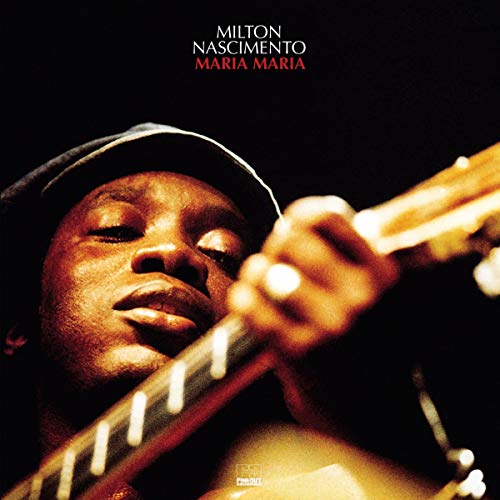
Please Note Not All Our New Items Are Shrink Wrapped.All items shipped within 3 working days of payment.Far Out Recordings proudly presents Milton Nascimento's Maria Maria. Recorded in 1974 and unreleased until almost thirty years later, the album was written as the soundtrack to a ballet which dealt with the legacy of slavery in Brazil. Raw, atmospheric and emotionally charged, Maria Maria reveals one of Brazil's greatest ever songwriters at his creative peak. rrFeaturing an all-star cast of fellow Brazilian legends including Nana Vasconcelos, Joao Donato, Paulinho Jobim, and members of Som Imaginario, Maria Maria holds what Milton considers to be the definitive versions of some of his classic songs, including 'Os Escravos De Jxf3' and 'Maria Maria'. rOriginally released in 2003 as a double CD package, with Milton Nascimento's 1984 follow up ballet soundtrack Ultimo Trem, Maria Maria will be available on vinyl for the very first time from December 2019, with Ultimo Trem set for vinyl release early 2020.rrMilton Nascimento possesses one of the most immediately recognizable voices in Brazilian music: high and sweet and as breathtakingly sublime as that of any soul singer. It was this voice that the legendary Brazilian singer Elis Regina fell in love with back in 1964, having heard Milton perform his song 'Canxe7xe3o do Sal (Sultry Song)' at a private party in Sao Paulo. Ellis went on to record the song in 1967 -giving Milton his first hit in Brazil and beginning a career that has spanned over 50 years.rrBorn in Rio on the 26th October 1942, Milton moved with his adoptive parents at the age of 18 months to Tres Pontas, a rural town in the state of Minas Gerais, 500 miles north of Rio. He began his musical career as a young teenager, singing in a crooner style he learnt from listening to Brazilian singers and US groups such as The Platters on the radio. Hungry for more opportunities to perform, Milton moved to Belo Horizonte, the capital of Minas Gerais, at the age of twenty. By the beginning of the 60s Milton had made a name for himself both as an accomplished singer and guitarist.rrMilton became part of a local network of musicians, film makers, dancers, theatre directors and writers that included the journalist and song writer Fernando Brant as well as lyricist Marcio Borges and his younger brother Lo Borges. Together these four wrote and produced what would become Milton's milestone album, 'Clube da Esquina (Club on the Corner)'. The originality of 'Club da Esquina' shaped the local scene, and it reflects the essence of 'the Nascimento Sound'. Milton's religious upbringing as an Afro-Brazilian Catholic saw him exposed to church choral music from an early age. His love of this genre of music is apparent in both his celestial falsetto and vocal choral arrangements. This collection also displays his early fascination with evocative, non-verbal, scat-style singing, spare, harmonic guitar work and local folk music, jazz and rock.rrIn 1976, Milton and Fernando Brant teamed up with a new contemporary dance company called Grupo Corpo, whose Argentinian choreographer Oscar Araiz, would become a collaborator with the two musicians. Together, they conceived a show based on the composite life story of the daughter of a black slave called Maria. Nascimento wrote music to Brant's lyrics and 'Maria Maria' was premiered in the main theatre of the Belo Horizonte Palacio das Artes that year. 'Fernando wrote the lyrics for the ballet, but there were originally no lyrics for the theme song, 'Maria Maria''. Milton and Fernando worked on the lyrics together, basing them on folk stories about black women of the countryside. Adds Milton 'These memories are mostly things that we witnessed u2013 Fernando and I u2013 rather than what we experienced ourselves.rrMilton's music is impressionistic, emotional and romantic. Relying on songs without lyrics as well as evocative vocalizing and choruses, Milton experimented heavily with Afro-Brazilian percussion and taped jungle sounds. His composing method for these recordings was highly unconventional: 'I wrote the music for 'Maria Maria' in a tiny Rio apartment with friends and their kids running around and having fun! I love to be in noisy places, surrounded by people', he says.rThe music on 'Maria Maria' was performed by an impressive group of young musicians who are today household names in Brazilian music, including Nanxe1 Vasconcelos (percussion and effects), Toninho Horta (guitars) and Paulo Moura (sax). Several vocalist including Nanxe1 Caymmi, Fafxe1 de Belxe9m, Beto Guedes, and Milton himself, had hits in years to come with reworkings of these songs.rrMilton says his compositions follow his visions 'like a movie', and he believes that reflects his long love affair with cinema. 'I only began composing because of enjoying the movies so much,' he says. 'I wrote my first song 'Peace for the Coming Love' after seeing 'Jules et Jim' (the cult 60s French film directed by Franxe7ois Truffaut), with my friend Marcio Borges. We went early in the morning and watched it four or five times in a row, then went to Mxe1rcio's home and wrote the song.'rrThe songs also include solo spoken passages set to music, clearly influenced by this style of French art cinema. On the title track, Maria's story is narrated and translated to music through the use of African Percussion, drums and metal signifying the field slave tools of the day. 'Trabalhos (Works)' runs to work rhythms and whipcracks: no words, just pain. 'Lxedlia' documents the beating of the slave woman. After 'A Chamada (The call)' and the triumphant 'Era Rei e Sou Escravo (I was a king now I am a slave' things begin to turn and Milton employs tropical jungle cries to symbolize freedom. 'Santos Catholicos x Candomble (Catholic Saints vs Candomble)' represents the battle between African and European religions through the music of both sides. Milton's heavenly falsetto pours into 'Francisco' and 'Pai Grande (Great Father)' and the outstanding 'Eu Sou Uma Preta Velha Aqui Sentada no Sol (I'm an old black lady, sitting under the sun)' conjures images of an old woman sitting deep in the forest, her memories painted in drums, piano and voices.rrSet for its first ever vinyl release, Maria Maria will be available on 2XLP from the 13th December 2019 via Far Out Recordings.rrCredits:rrMilton Nascimento u2013 guitar, piano, synthesizer, vocalsrrNovelli u2013 bass, vocalsrrNelson Angelo u2013 guitar, synthesizer, vocalsrrBeto Guedes u2013 guitar, bandolin, synthesizer , vocalsrrJoxe3o Donato u2013 piano, organ, percussionrrVermelho u2013 organ, vocalsrrHxe9lcio Rodrigues u2013 drums, percussionrrCaboclinho u2013 atabaquesrrTavinho Moura u2013 whistles, vocalsrrOscar Araiz u2013 percussionrrNxe1na Vasconcelos u2013 vocals percussion, drums, effectsrrSirlan, Cafi, Nico Borges, Telo Borges e Ronaldo Bastos u2013 effectsrrPaulinho Braga u2013 drums, percussionrrWagner Tiso u2013 piano, organ, vocalsrrValdir, Renato, Malu u2013 coralrrZxe9 Rodrix u2013 organ, flutes, percussion, vocalsrrTavito u2013 guitar, vocalsrrFrederyko u2013 guitar, whistles, vocalsrrLuiz Alves u2013 bassrrRobertinho Silva u2013 drumsrrPaulo Moura u2013 saxophonerrNana Caymmi u2013 vocalsrrFafxe1 de Belxe9m u2013 vocalsrrClementina de Jesus u2013 vocals
Details
- Genre: Folk & Country
- Product Type: Vinyl
- Barcode: 5060114368170
Delivery and Returns
Dispatch Information: Dispatch times vary by item and items are only dispatched on UK working days – not weekends or UK Bank Holidays. Items marked "Dispatched Same Day" will be dispatched on the day of purchase if bought before 2pm GMT. "Dispatched Same Day" items bought after 2pm GMT or on a non-working day will be dispatched on the next working day. For all other items the dispatch timeframe is clearly labelled on the product page.
Delivery Information: We aim to deliver your order as quickly and efficiently as possible. All UK orders are dispatched using Royal Mail 48 Tracked service and the standard delivery times are 2-3 business days. Please note that delivery times for overseas orders will vary depending on your location and the shipping option you choose during checkout.
Shipping Costs: We offer free delivery on all UK orders and free worldwide delivery on orders over £15.
Tracking Your Order: All UK orders are tracked. Once your order is dispatched, you will receive a tracking number via email. You can use this tracking number to monitor the progress of your delivery on the Royal Mail Track and Trace website.
Returns and Exchanges: We want you to be completely satisfied with your purchase. If for any reason you are not happy with your order, you may return it within 28 days of the item being dispatched for a refund or exchange. Please note the following guidelines:
- Items must be returned in their original condition and packaging – items that have been opened or had shrink wrap removed are not eligible for return or refund.
- Make sure to include your order number in the returned package.
How to Initiate a Return: To initiate a return or exchange, please contact our customer service team. The team is available to assist you with any questions or concerns you may have about the process.
Refund Processing: Refunds will be processed as soon as we receive your item back into our warehouse. Replacements are subject to availability and if a replacement is not available, a refund will be issued.
If you have any further questions or need assistance, please don't hesitate to contact our customer service team or check out our FAQ’s. We're here to help ensure your shopping experience is enjoyable and hassle-free. Thank you for choosing Chalkys!
Delivery Information: We aim to deliver your order as quickly and efficiently as possible. All UK orders are dispatched using Royal Mail 48 Tracked service and the standard delivery times are 2-3 business days. Please note that delivery times for overseas orders will vary depending on your location and the shipping option you choose during checkout.
Shipping Costs: We offer free delivery on all UK orders and free worldwide delivery on orders over £15.
Tracking Your Order: All UK orders are tracked. Once your order is dispatched, you will receive a tracking number via email. You can use this tracking number to monitor the progress of your delivery on the Royal Mail Track and Trace website.
Returns and Exchanges: We want you to be completely satisfied with your purchase. If for any reason you are not happy with your order, you may return it within 28 days of the item being dispatched for a refund or exchange. Please note the following guidelines:
- Items must be returned in their original condition and packaging – items that have been opened or had shrink wrap removed are not eligible for return or refund.
- Make sure to include your order number in the returned package.
How to Initiate a Return: To initiate a return or exchange, please contact our customer service team. The team is available to assist you with any questions or concerns you may have about the process.
Refund Processing: Refunds will be processed as soon as we receive your item back into our warehouse. Replacements are subject to availability and if a replacement is not available, a refund will be issued.
If you have any further questions or need assistance, please don't hesitate to contact our customer service team or check out our FAQ’s. We're here to help ensure your shopping experience is enjoyable and hassle-free. Thank you for choosing Chalkys!